Anthropic
Claude Opus 5 is Anthropic’s flagship model for demanding reasoning, coding, and long-horizon agentic work. It is particularly strong at end-to-end software tasks, code review and bug finding, visual analysis...
Claude Opus 5 is Anthropic’s flagship model for demanding reasoning, coding, and long-horizon agentic work.
This model is still tracked for research and discovery, but it is excluded from default public rankings until it returns to active status.
25.5
Quality Score
---
Arena ELO
Undisclosed
Parameters
1M
Context
Sign in to join the discussion
0
Downloads
0
Likes
Jul 2026
Released
Launches
3
Benchmarks
1
API
1
Research
4
General
2
Recent launch, pricing, benchmark, and API signals linked to this model or its provider.
GAIA score 58.1 from Jaram 4.0
As part of our Responsible Scaling Policy, we publish regular Risk Reports. These share detailed information on the risks of our systems and how prepared we are to address them. Our second Risk Report is now available: https://t.co/NgWnDmXZD3
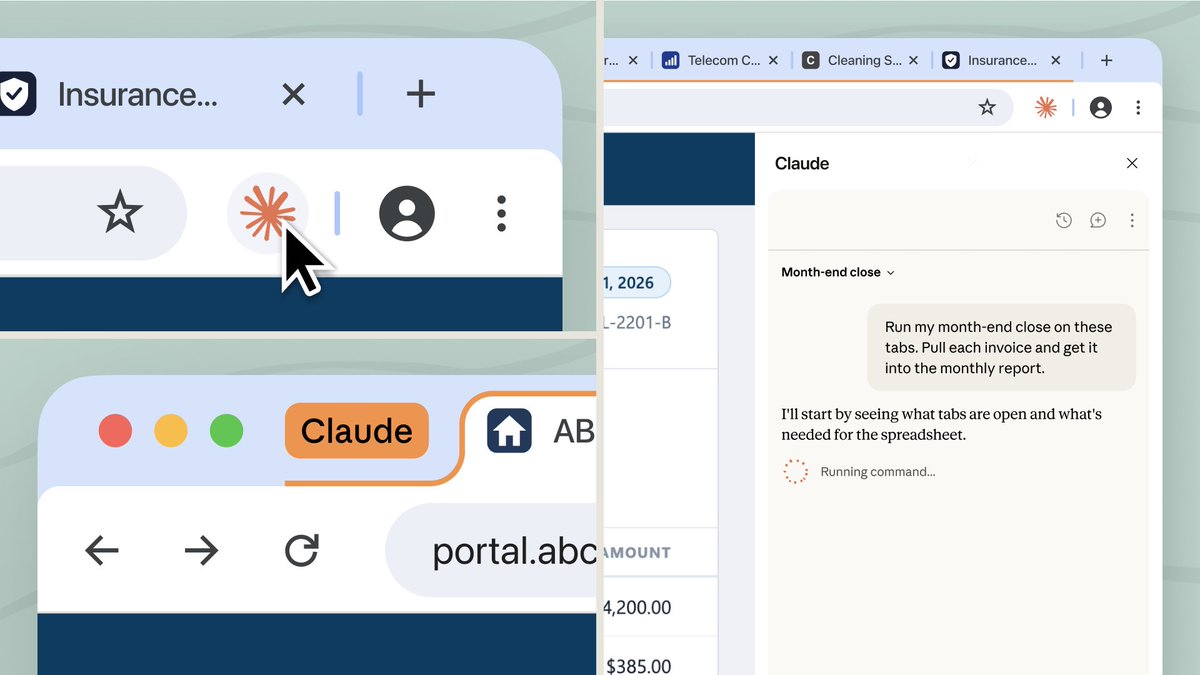
View sourceYour Claude in Chrome sessions now carry over to desktop, web, and mobile. Conversations are saved, and your skills and connectors work in the browser. Available on Max and Team today, rolling out to Pro in the coming weeks. https://t.co/Hnxs18PVI8
View sourceGAIA score 58.1 from Jaram 4.0
View sourceWe’ve written an FAQ to answer some of the questions we've received about watermarking. In summary: • We’re implementing watermarking to comply with the EU AI Act. Other major model developers have signed the same Code of Practice and will also be implementing watermarking;
View sourceClaude can now send emails in Gmail and manage files in Google Drive. Ask Claude to reply to a thread, and it drafts and sends the response. You control when it needs your approval. Connect Gmail or Google Drive from the connectors menu to try. Available on all paid plans. https://t.co/cFZEjh3MgB
We’ve written an FAQ to answer some of the questions we've received about watermarking. In summary: • We’re implementing watermarking to comply with the EU AI Act. Other major model developers have signed the same Code of Practice and will also be implementing watermarking;
As part of our Responsible Scaling Policy, we publish regular Risk Reports. These share detailed information on the risks of our systems and how prepared we are to address them. Our second Risk Report is now available: https://t.co/NgWnDmXZD3

Your Claude in Chrome sessions now carry over to desktop, web, and mobile. Conversations are saved, and your skills and connectors work in the browser. Available on Max and Team today, rolling out to Pro in the coming weeks. https://t.co/Hnxs18PVI8
Agent harnesses have substantially improved performance on long-horizon tasks by coordinating agent interactions with the environment. However, reinforcement learning through complex harnesses remains largely unexplored, as scaling such training to long-horizon agent tasks introduces fundamental challenges. In this work, we present a unified black-box RL framework for stable and scalable optimization of general agents through complex harnesses. Concretely, we first build a sandbox-based execution infrastructure that isolates task environments and harnesses within temporary sandboxes for large-scale concurrent rollouts. We then decouple policy optimization from opaque harness execution and place a serving proxy at the model boundary to capture model calls. To reconstruct multi-turn trajectories and improve training efficiency, we organize the captured calls into prefix trees and further adapt both critic-based PPO and critic-free GRPO to optimize over the recovered tree structure. Meanwhile, we maintain training-inference consistency throughout the optimization process. Finally, we introduce mix-harness training, allowing a single model to be jointly optimized by heterogeneous harnesses. With Qwen3-30A3B, black-box RL improves Pass@1 on ClawGym-Bench by 9.98 and 14.81 points through OpenClaw and Claude Code, respectively, while remaining stable over 200-400 optimization steps. Moreover, the framework yields consistent gains on more challenging tasks such as JobBench and OfficeQA. Overall, our framework enables effective, stable, and scalable optimization of general agents through black-box harnesses, supporting unified training across heterogeneous execution systems.
Large language model (LLM) agents are evolving from conversational assistants into autonomous systems that execute long-horizon tasks through reasoning, tool use, code generation, and workspace manipulation. As agents increasingly operate over persistent environments and multi-step workflows, they face challenges analogous to those addressed by transactional database systems: reliable execution, consistent outcomes, safe concurrency, and durable state management. We introduce the concept of an agentic transaction and propose an ACID-compliant agent system framework that reinterprets the classical ACID properties for agent execution through four semantic guarantees: Semantic Atomicity, Semantic Consistency, Semantic Isolation, and Semantic Durability. Together, these properties provide a principled foundation for building reliable agent systems despite model uncertainty and dynamic execution environments. To instantiate this framework, we develop an ACID-compliant data agent that realizes these guarantees through transactional exploration-execution-validation cycles, transactional skill hubs, confidence divergence-based validation, semantic dependency-aware isolation, and transaction-aware semantic state management. Experimental results on widely used benchmarks show that our system achieves a 10.6% improvement over state-of-the-art agents, including Claude Code. This work opens a broader research agenda on extending transactional principles and system architectures toward building trustworthy, scalable, and self-evolving AI agent systems.
Transforming multimodal sources into condensed and structured media outputs can be fundamentally conceptualized as a long-horizon agentic process centered on a model-harness system. While an ideal harness system should align with human design priors and accumulate reusable experience through empirical exploration to drive recursive self-improvement, existing paradigms remain static and fall short of this capability. In this paper, we present AutoDesign, a framework that aligns with human design priors, where a meta-harness optimizer guides a code agent to recursively improve harness based on rollout feedback. To instantiate and evaluate this framework, we focus on the academic paper-to-poster generation task and introduce PosterBench, comprising a 100-paper Main Track spanning five disciplines and PosterBench-mini, a shared 10-paper subset for controlled evaluation. On the PosterBench Main Track, AutoDesign achieves the highest score of 78.32, surpassing the closed-source commercial system Claude Design by 7.45 points. Across seven controlled code-agent-model configurations, integrating the learned DesignHarness consistently improves performance, increasing the average PosterBench Score from 54.99 to 67.39 (+12.4%). In a fully autonomous long-horizon loop, it executes 253 tool calls and 11 editing turns within 40 minutes for under $3, reaching average conference-poster quality in human evaluation. A system-blind human study further demonstrates that AutoDesign achieves the highest human preference among evaluated systems.
AI models have achieved remarkable success across diverse domains, yet the mechanisms underlying their capabilities and the risks they may pose remain poorly understood. As AI development becomes faster and increasingly automated, mechanistic exploration remains largely manual, widening the gap between what models can do and our ability to understand and control them. To bridge this gap, we introduce Mechanist, an agentic system that uses AI as a scientific instrument for the autonomous discovery of mechanisms underlying AI intelligence. To support autonomous mechanistic discovery, we construct an interpretability-focused knowledge graph of approximately 13,000 papers and integrate it with a multidisciplinary database of 43 million papers spanning 26 fields. We further curate a library of 32 foundational methods for mechanism analysis, causal intervention, and validation. Compared with Claude Code and existing AI-scientist systems, Mechanist generates more valuable mechanism hypotheses and executes experiments more reliably. Mechanist also demonstrates a progression from discovering model behaviors to explaining and controlling AI models. Specifically, Mechanist first uncovers a counterintuitive safety risk in scientific laboratories, showing that unsafe traits can transfer across modalities through apparently safe training data. Mechanist then develops a mechanism theory of belief, revealing how models represent world knowledge, form beliefs, infer the beliefs of others, and how these mechanisms emerge during pretraining. Finally, Mechanist translates these mechanistic insights into practical interventions that improve model performance across diverse scenarios and steer scientific foundation models toward generating DNA sequences with specified properties.