LaunchesMicrosoft1mo ago

X/Twitter@MicrosoftAIMicrosoftannouncementgeneral4d ago
A look back before we look forward... Since Build we have shipped 14 models. https://t.co/o9AANRxF9H
View Post
#microsoft#twitter#x
Microsoft
VibeVoice-ASR is a unified speech-to-text model designed to handle 60-minute long-form audio in a single pass, generating structured transcriptions containing Who (Speaker), When (Timestamps), and What (Content), with support for Customized Hotwords and over 50 languages.
Running this yourself: desktop gpu should be enough.
Live access is not confirmed for this model. No current purchase price is advertised.
No current subscription pricing is tracked for this model.
Confirm this specific model, usage limits, and billing terms with the provider. A subscription does not automatically include API credits.
No login needed to compare. Prices are in USD; provider charges are separate from AI Market Cap plans. Context length, caching, tools, taxes, and regional terms can change the final cost. Open weights do not mean free hosting.
56.3
Quality Score
---
Arena ELO
9B
Parameters
---
Context
This measures the amount of verifiable public evidence we have, not how capable the model is. A missing field means it has not been verified yet, not that its value is zero.
16 of 22 public signals
Sign in to join the discussion
718.6K
Downloads
1.3K
Likes
Jan 2026
Released
4/5 signals
3/4 signals
3/5 signals
3/4 signals
3/4 signals
Parameters
9B
Training compute
Not reported
Dataset scale
Not reported
Base model
Not reported
Gaps we are still tracking
Metadata sources
Launches
3
Benchmarks
4
Research
2
General
5
Recent launch, pricing, benchmark, and API signals linked to this model or its provider.
Microsoft published benchmark or leaderboard evidence for VibeVoice-ASR.
More ways to discover, access, and build with MAI models. MAI models are now available through Vercel, giving developers another way to bring Microsoft AI models into the products and experiences they’re building. This includes our existing MAI models plus today’s newest
View sourceThrilled to announce by popular demand MAI-Code-1-Flash is now generally available for GitHub Copilot Business and GitHub Copilot Enterprise - fast, efficient, and custom designed to help you build more for less on @github
View sourceMicrosoft published benchmark or leaderboard evidence for VibeVoice-ASR.
View sourceMAI-Transcribe-2, the best transcription model in the world, is now generally available in Microsoft Foundry for production use cases! And it’s currently priced at just $0.10 per hour of audio. Come build with it!

More ways to discover, access, and build with MAI models. MAI models are now available through Vercel, giving developers another way to bring Microsoft AI models into the products and experiences they’re building. This includes our existing MAI models plus today’s newest

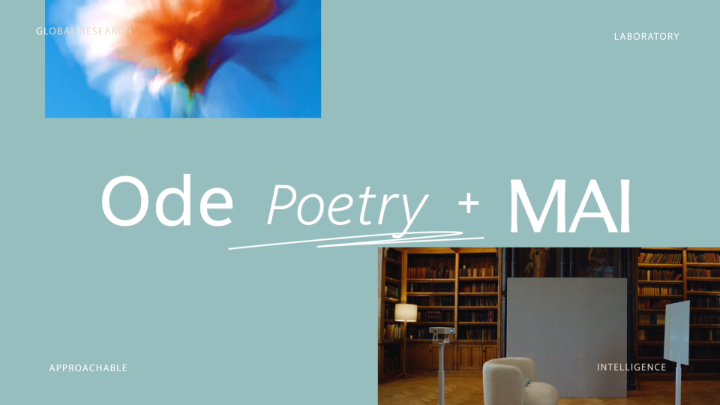
Say how you feel. Get a poem that meets you there. Ode connects you with a poem for your moment. Guided by William Sieghart. Powered by Microsoft AI models. Try it out here: https://t.co/egu88NTf9C https://t.co/jQ3qm9sKnz
Thrilled to announce by popular demand MAI-Code-1-Flash is now generally available for GitHub Copilot Business and GitHub Copilot Enterprise - fast, efficient, and custom designed to help you build more for less on @github
Traditional speaker-attributed ASR systems treated ASR and speaker diarization as two separate tasks. Recently, end-to-end models such as VibeVoice-ASR have unified the two tasks within a single model. However, existing unified models still mainly support offline recognition, making it difficult to meet the low-latency requirements of real-time voice assistants and agents. To tackle this issue, we present VibeVoice-ASR-Streaming, one of the first LLM-based end-to-end approaches to streaming speaker-attributed ASR. It interleaves fixed-size audio chunks, a small amount of lookahead audio and previous text. This allows the model to produce ''who said what'' as speech arrives, without a separate diarization stage. For transcription accuracy, our 7B model achieves the lowest average WER/CER across five evaluation sets. For speaker attribution, it achieves the best or tied-best on 12 of 13 evaluation settings. We release the 1.5B and 7B model weights together with inference code.
The Muon optimizer incurs a significant overhead cost due to its cubic-time Newton-Schulz orthogonalization step. When weights are sharded, communication overhead compounds this computational cost, eroding the benefits of Muon in many settings. We present Dion3, a revision of Muon that targets this overhead at every level of the stack. Our Gram Newton-Schulz algorithm reduces the FLOP cost of orthogonalization, our CuteDSL kernels accelerate it by exploiting symmetry, and our megabatching strategy reduces communication overhead. Moreover, we propose a simple change to the update rule that cuts costs even further: selecting only a fraction of the momentum matrix's rows to orthogonalize at each step. This update rule improves on Dion (another "compressed" version of Muon), in both speed and performance. Overall, Dion3 matches or improves on the loss achieved by Muon but reduces optimizer step time by up to 6x. Dion3 is available via the dion package (https://github.com/microsoft/dion) as a drop-in replacement for Muon.
Microsoft published benchmark or leaderboard evidence for VibeVoice-ASR.
Microsoft published benchmark or leaderboard evidence for VibeVoice-ASR, VibeVoice ASR.